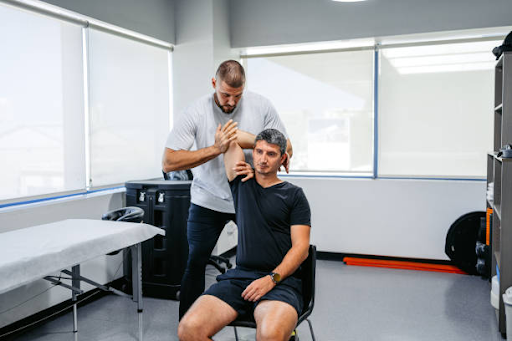
Frozen Shoulder Physiotherapy Treatment in Brampton
If reaching, dressing, or sleeping on your side has become painful, a frozen shoulder could be the cause. Mankind Rehab Centre offers frozen shoulder physiotherapy in Brampton, proudly serving patients throughout Brampton and the surrounding areas. Our care is delivered by registered physiotherapists, with a personalized plan to reduce pain and restore movement.
This page is for general information and doesn’t replace an in-person assessment. If your shoulder pain is severe, follows an injury, or comes with numbness, fever, or sudden weakness, seek medical attention right away.
Understanding Frozen Shoulder

Frozen shoulder, also known as adhesive capsulitis, happens when the connective tissue surrounding the shoulder joint, the joint capsule, becomes thickened and tight. This gradually restricts movement and causes pain that can range from a dull ache to sharp discomfort during activity.
It typically develops in three overlapping stages:
Freezing Stage – Pain gradually increases and shoulder movement starts to become limited, often over several weeks to a few months.
Frozen Stage – Pain may ease slightly, but stiffness becomes more pronounced, making everyday movements difficult.
Thawing Stage – Movement slowly returns as the joint capsule loosens.
Recovery timelines vary from person to person, and frozen shoulder can take months to over a year to fully resolve on its own. Physiotherapy can’t rush the underlying biology, but it can help manage pain, protect the motion you still have, and support a smoother, more functional recovery at every stage. Not sure which stage you’re in? That’s exactly what your assessment is for.
Symptoms of Frozen Shoulder
Frozen shoulder symptoms tend to build gradually and worsen if left unaddressed. Common signs include:
- Dull, aching pain deep in the shoulder joint
- Stiffness that limits your range of motion
- Difficulty lifting your arm overhead or reaching behind your back
- Pain that worsens at night and disrupts sleep
- Trouble with everyday tasks like getting dressed, reaching for objects, or driving
- Noticeably less mobility compared to your unaffected shoulder
These symptoms can overlap with other shoulder conditions, like rotator cuff injuries or arthritis, so getting an accurate assessment matters treatment looks different depending on what’s actually going on. If this sounds like what you’re experiencing, book an assessment early rather than waiting for it to get worse.
Causes of Frozen Shoulder
The exact cause isn’t always clear, but several factors are linked to a higher risk of developing frozen shoulder:
- Prolonged immobility – Recovering from surgery, a fracture, or an injury that limits shoulder movement for an extended period
- Diabetes – People with diabetes are significantly more likely to develop frozen shoulder, and it can take longer to resolve
- Other health conditions – Thyroid disorders, cardiovascular disease, and Parkinson’s disease have been linked to higher risk
- Age and sex – Most common in adults 40–60, and more common in women, particularly around the menopausal transition
- Previous shoulder injury or surgery – A history of trauma, overuse, or immobilization can contribute
Having one of these risk factors doesn’t mean frozen shoulder is inevitable, but it’s worth flagging to your physiotherapist if shoulder stiffness starts to set in, so it can be caught and managed early.
Physiotherapy Techniques for Frozen Shoulder
Effective frozen shoulder physiotherapy isn’t a single treatment it’s a combination of techniques matched to your stage of recovery and current level of discomfort. Our physiotherapists select from the following based on your assessment:
- Manual Therapy – Hands-on techniques to ease stiffness and encourage movement in the shoulder capsule.
- Joint Mobilization – Gentle, graded movements applied to the shoulder joint to gradually improve its range.
- Stretching Exercises – Targeted stretches that build flexibility without overloading an already irritated joint.
- Strengthening Exercises – Progressive strengthening around the shoulder, introduced once acute pain has settled, to support long-term stability.
- Range of Motion Training – Guided movement exercises to help restore functional use of the arm and shoulder.
- Heat Therapy – Applied to relax tissue and ease stiffness, often used before mobility work.
- Cold Therapy – Used to help manage pain and inflammation, particularly during the more painful freezing stage.
- Postural Correction – Addressing movement and posture habits that may be adding strain to the shoulder.
- Home Exercise Program – A personalized set of exercises to support progress between in-clinic visits.
- Patient Education – Helping you understand your condition, what to expect at each stage, and how to protect your shoulder during recovery.
Not every technique is appropriate at every stage of frozen shoulder; pushing too hard, too early, can aggravate symptoms. That’s why treatment is guided by your assessment and adjusted as you progress, rather than following a fixed protocol.
Why Choose Mankind Rehab for Physiotherapy in Brampton?
Professional Qualifications and Expertise
Our physiotherapists and chiropractor are regulated healthcare professionals, registered to practice in Ontario. We take the time to understand your medical history, assess your condition, and identify the right treatment plan for your recovery.
Client Reviews and Testimonials
Treatment Options and Approach
Every plan combines manual therapy, targeted exercise, and education, built around your assessment and adjusted as you respond to treatment.
Complete physiotherapy care in Brampton means looking at your shoulder in the context of your overall health. Take the first step toward your recovery with a team that’s here to support you.

3 EASY STEPS TO RECOVER
TO FEELING, PERFORMING AND FUNCTIONING AT YOUR BEST